English
 中文
中文 Русский язык
 Français
 Español

Why Electrical Cable Lugs Overheat and How to Fix Them
You‘re performing a routine thermographic scan of the main distribution panel. Most connections look normal, but one cable lug glows bright red on the thermal camera—easily 30°C hotter than the others. The equipment hasn’t failed yet, but that hot spot is a warning. An Electrical Cable Lugs connection that runs hot is the single most common precursor to insulation failure, equipment damage, and even fire. The heat often comes from a loose mounting screw, a poorly crimped barrel, or corrosion that has crept into the contact interface. Before you shut down the system and start cutting wires, this guide walks through the three most common overheating patterns, how to confirm the root cause on the spot, and the field fixes that restore a reliable connection without wholesale cable replacement.
What the heat pattern tells you about the failure
The location and behavior of the overheating reveal the root cause before you disconnect anything. Use an infrared thermometer or thermal camera during normal load conditions.
Heat concentrated at the barrel—the crimped section. The lug barrel reads significantly hotter than the adjacent cable insulation. This points to a crimping issue: the die was the wrong size, the crimp was off‑center, or the cable wasn’t fully inserted into the barrel. A poor crimp creates air gaps between the conductor strands, increasing resistance and generating localized heat. Over time, this progressive heating degrades the insulation and leads to catastrophic failure.
Heat concentrated at the mounting point—where the lug bolts to the bus bar or terminal. The lug pad is hot, but the barrel and cable are cool. This indicates a loose mounting screw, insufficient torque, or a contaminated contact surface. The lug may feel tight, but if the conductive interface between the lug and the bus bar is compromised, heat builds up.
Heat that appears only under heavy load but disappears when current drops. The connection runs cool for hours, then spikes during peak demand. This is the most dangerous pattern because it suggests a mechanical connection that is just barely adequate. Under high current, the resistance generates enough heat to cause thermal expansion, which may further loosen the connection in a worsening cycle.
Intermittent heat that comes and goes randomly. A connection that heats unpredictably points to vibration-related loosening, corrosion that fluctuates with humidity, or a damaged conductor strand that moves under load.
Locating the source with simple field tools
Thermal imaging. Scan all electrical cable lugs under normal operating load. A lug that is more than 10–15°C hotter than adjacent connections of similar current-carrying capacity requires investigation. If the panel has been running for several hours, any terminal exceeding the cable’s insulation rating (typically 75°C or 90°C) is a problem. Document baseline temperatures after each inspection to spot gradual degradation.
Voltage drop measurement. With the system energized, use a precision multimeter to measure the voltage drop across the connection. Place one probe on the cable conductor immediately before the lug barrel and the other probe on the bus bar or terminal pad. A drop exceeding 10–20 mV at rated current indicates excessive resistance at that interface. Compare readings across identical lugs—a significantly higher drop on one connection confirms a problem.
Mechanical check. De‑energize the equipment and attempt to rotate the lug by hand. Any movement indicates loose mounting hardware. Gently tug the cable near the lug barrel; if the conductor pulls out or shifts, the crimp has failed.
Fixing the three most common overheating causes
Loose mounting screw. This is the most frequent field failure—and the easiest to fix. Before tightening, inspect the contact surfaces. If the lug pad shows discoloration, pitting, or carbon tracks from previous arcing, clean it with fine sandpaper (400–600 grit) and isopropyl alcohol. Apply the correct torque according to the equipment manufacturer‘s specification. For copper lugs on typical industrial terminals, torque values range from 11 N·m for smaller studs up to 50 N·m for larger sizes. If the lug itself is loose, remove the cable, properly tighten the mounting screw, reinstall the cable, and secure the cable in the lug. Never put washers between a lug and the bus bar or terminal device—the lug goes first, followed by the flat washer, lock washer, and nut. After repair, perform a thermal scan to verify the temperature has normalized.
Poor crimp. If the barrel is overheating and the mounting screw is tight, the crimp is likely defective. Common crimping errors include using the wrong die size, off‑center crimp placement, insufficient insertion depth, or missing conductor strands. The fix depends on the severity of the damage. If the barrel is discolored but not deformed, cut off the damaged section of cable, strip fresh insulation, and re‑terminate with a new lug using the correct die matched to the lug’s index number. Always match the die index to the lug, not just the wire gauge. A bad crimp cannot be repaired—the lug must be cut off and replaced. Poor crimping creates spacing between wire strands, resulting in higher contact resistance and heating that worsens over time.
Corroded or contaminated interface. Corrosion on the lug pad or bus bar surface increases contact resistance dramatically. Bare copper lugs oxidize quickly in humid environments, while tinned copper lugs maintain stable conductivity over time due to the protective tin film. For field repair, disconnect power and clean both mating surfaces with a wire brush or fine sandpaper until shiny. Apply a thin layer of antioxidant compound (such as No‑Ox‑ID or similar) before reassembly, then torque to specification. If the lug is severely pitted or shows signs of arcing, replace it entirely. For installations in wet or corrosive environments, specify tinned copper lugs for superior long‑term corrosion protection.
Prevention: stopping the cycle before it starts
Crimp quality control. The best prevention is a perfect crimp from the start. Always match the die index number stamped on the lug to the die set—never guess based on wire gauge alone. Insert the cable fully into the barrel until it bottoms out. After crimping, perform a pull test: the conductor should not move. For high‑reliability installations, use a crimp force monitor that detects incomplete crimps in real time. Industry data shows that about half of failed lugs had asymmetric crimps where the crimp force was unevenly applied. A good crimp is uniform and leaves the barrel visibly compressed around the full circumference.
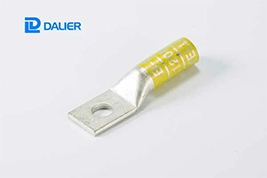
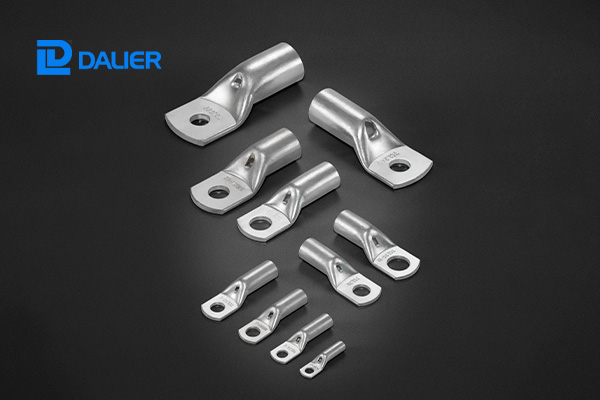
Proper lug selection. Selecting the right lug for the application is the first line of defense. Copper lugs have substantially better electrical conductivity than aluminum—approximately 40% higher, meaning less resistance and less heat. For outdoor or high‑humidity applications, tinned copper lugs offer superior corrosion resistance compared to bare copper. The TM‑L Copper Compression Terminal - One Hole/Long Barrel from Dalier is crafted from high‑purity copper and UL listed per 486A up to 35KV, ensuring safety and compliance for copper conductor terminations. Always verify that the lug’s barrel size matches the cable gauge exactly. Using an undersized lug can damage strands; an oversized lug leaves air gaps that cause overheating.
Fastener torque management. Develop a torque verification schedule for critical connections. Vibration and thermal cycling gradually loosen bolts over time. Use a calibrated torque wrench—never rely on hand feel. For installations subject to continuous vibration, apply thread‑locking compound (medium strength) and use lock washers or locknuts. Record torque values in a maintenance log with dates, creating a baseline to track creep or loosening trends.
Questions from electricians and maintenance teams
Q: How hot is too hot for a cable lug connection?
A: Under normal load, a lug should not feel excessively hot to the touch. As a guideline, if the lug temperature exceeds 75–90°C (the typical insulation rating of the connected cable), it requires immediate investigation. In thermographic inspections, a delta‑T of 10–15°C above adjacent similar connections under identical load is a standard alert threshold. If the lug is hot enough to discolor copper or melt insulation, the connection has already failed—shut down and replace.
Q: Can I reuse a lug after removing it from a cable?
A: No. Compression lugs are designed for one‑time use. Once crimped, the barrel has been permanently deformed. Reusing a lug will not achieve the required compression force, leading to high resistance and overheating. Always use a new lug for every termination.
Q: Why does the same lug keep overheating after I tightened it?
A: Repeated overheating after tightening suggests underlying damage to the lug or the mating terminal. The lug pad may have been deformed by previous overtightening, or the bus bar surface may be pitted from arcing. Replace the lug and inspect the mating terminal. If the terminal is damaged, it may need replacement as well—a damaged conductive interface will overheat regardless of how tightly you fasten it.
Q: What’s the difference between a one‑hole and two‑hole lug?
A: One‑hole lugs are used for general applications where the connection is not subject to high vibration. Two‑hole lugs provide additional rotational stability and are required for most UL‑listed applications above a certain current rating, preventing the lug from twisting on the bus bar. The TM‑L series offers both configurations to suit different installation requirements.
Q: Are tinned copper lugs really better than bare copper?
A: Both provide excellent initial conductivity, but long‑term performance diverges. Bare copper lugs have slightly lower resistance initially, but oxidation in humid environments quickly degrades that performance. Tinned copper lugs maintain stable electrical conductivity over time in exposed or humid conditions, thanks to the protective tin film that resists oxidization. Tinned copper lugs are also easier to crimp and solder because the smooth tin surface reduces friction.
Q: Why does a loose mounting screw cause overheating even if the lug feels tight?
A: When you tighten the screw holding the lug to the bus bar, you compress the lug pad against the terminal surface. If the screw is loose, the contact pressure is reduced, leaving only microscopic contact points. The current is forced through these small contact points, generating intense localized heating. A loose screw may still feel “tight” if the threads have seized or the nut is binding, but the clamping force on the lug pad is insufficient. Always use a torque wrench and verify the specified torque is reached.
Dalier Electrical Cable Lugs: built for reliable connections
When connection reliability is critical, the quality of the Electrical Cable Lugs themselves determines long‑term performance. Dalier manufactures high‑purity copper compression terminals, including the TM‑L Copper Compression Terminal - One Hole/Long Barrel, specifically designed for the termination of copper conductors. Crafted from high‑purity copper ensuring excellent electrical conductivity, these lugs are UL listed per 486A up to 35KV, providing documented safety and compliance for industrial and commercial installations.
The long barrel design maximizes the number of crimps and provides premium wire retention, reducing the risk of pull‑out failures in high‑vibration environments. For engineers and electricians dealing with recurring connection overheating, upgrading to properly specified Dalier lugs—installed with the correct torque and surface preparation—eliminates a common source of downtime. Dalier‘s commitment to quality ensures that each lug meets strict manufacturing standards, providing consistent performance across every termination.
→ Request a quote from Dalier for the TM‑L Copper Compression Terminal - One Hole/Long Barrel — Share your cable gauge (AWG or mm²), system voltage, and environmental conditions (indoor, outdoor, humid). Their technical team can recommend the correct lug configuration and provide installation guidance.