English
 中文
中文 Русский язык
 Français
 Español

Why Non-Insulated Terminals Belong in Your Electrical System
You‘re building a wiring harness for industrial equipment, or maybe you’re maintaining the electrical system in a recording studio. The terminals you choose determine whether those connections last for years or fail in months.
A Non-Insulated Terminals product like Dalier‘s non-insulated butt splice terminal BN offers a combination of performance and durability that insulated terminals can’t match in certain applications. Made from high-purity oxygen-free copper with tin plating, these terminals resist corrosion, handle high switching frequencies, and deliver consistent performance across a wide range of environments.
This guide covers what makes non-insulated terminals different, the key features that matter, where they‘re used, and what to look for when sourcing them. For electrical engineers, assemblers, and maintenance professionals, this is a practical look at a component that’s often overlooked—but never unimportant.
What Makes Non-Insulated Terminals Different
The design of a non-insulated terminal is straightforward: bare metal, direct crimp, no plastic sleeve. That simplicity is exactly what makes it work.
Direct Crimping Without Insulation
Non-insulated terminals are designed for direct crimping onto the wire. Without an insulating sleeve, the crimp is closer to the conductor, creating a more secure mechanical and electrical connection. The bare metal design also allows for visual inspection of the crimp quality—you can see exactly what you‘re getting.
High-Purity Oxygen-Free Copper
The material matters. Dalier’s non-insulated terminals are made from high-purity oxygen-free copper. Oxygen-free copper offers higher conductivity than standard copper and is less prone to hydrogen embrittlement, making it the preferred choice for critical electrical connections.
Tin Plating for Corrosion Resistance
The copper is tin-plated to resist corrosion. Tin plating provides a protective barrier against oxidation, ensuring that the connection remains low-resistance over time. In humid or chemically aggressive environments, this protection is essential.
Four Features That Make These Terminals Reliable
Non-insulated terminals offer a combination of performance characteristics that make them suitable for demanding applications.
Salt Spray Tested for Durability
Dalier‘s tinned terminals are salt spray tested for 24 hours. This testing simulates years of exposure to corrosive environments in a matter of hours, confirming that the terminals can withstand the conditions they’ll face in the field. For applications in coastal areas, industrial settings, or outdoor equipment, this level of corrosion resistance is non-negotiable.
Stable Performance Across Environments
The performance of the insulated terminal is very stable, not easily affected by the domestic geographical location. Whether you‘re installing equipment in a humid coastal city or a dry inland region, the terminal delivers consistent electrical performance. This stability reduces the risk of connection failure due to environmental factors.
High Switching Frequency Capability
The switching frequency of the tin-plated terminal is high, and the loss caused by the control signal is also very small. For applications involving frequent switching—control circuits, relay panels, automated equipment—low signal loss translates to more reliable operation and fewer false triggers.
Reduced Failure Probability
The combination of stable performance and low signal loss can greatly reduce the probability of some kind of failure in the enterprise. For maintenance teams, this means fewer callbacks. For production lines, it means less unplanned downtime. For the bottom line, it means lower total cost of ownership.
Where Non-Insulated Terminals Are Used
Non-insulated terminals are found in applications where reliability, space, and performance matter.
Audio and Recording Equipment
In home recording studios, non-insulated terminals are ideal for connecting wires of microphones and audio interfaces for clear sound. The direct crimp connection ensures low resistance, which is critical for maintaining signal integrity in audio applications.
Industrial Control Panels
Control panels and switchgear require reliable connections that can handle vibration and temperature changes. Non-insulated terminals provide secure, inspectable connections that maintenance teams can easily verify.
Automotive and Transportation
In vehicles and transportation equipment, space is at a premium. Non-insulated terminals offer a compact connection solution that fits into tight spaces where insulated terminals won‘t.
Appliance and Equipment Manufacturing
Manufacturers of appliances, power supplies, and electronic equipment use non-insulated terminals for internal wiring. The bare metal design allows for automated crimping, reducing assembly time and improving consistency.
Types of Non-Insulated Terminals
Non-insulated terminals come in several common configurations, each designed for a specific connection type.
Butt Splice Terminals
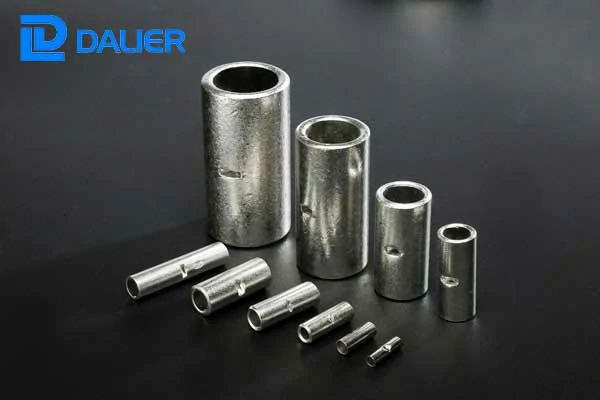
The butt splice terminal BN is designed for joining two wires end-to-end. The wire is inserted from both ends and crimped in the center, creating a continuous electrical path. Butt splices are the most common type of non-insulated terminal, used in everything from automotive wiring to industrial control panels.
Ring Terminals
Ring terminals feature a circular opening that fits around a stud or bolt, providing a stable connection. The non-insulated ring terminal SNB is made from high-quality oxygen-free copper with tin-plating to resist corrosion. The ring shape ensures the connection won‘t pull off even under vibration.
Spade and Blade Terminals
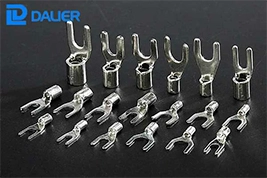
Spade terminals (also called fork terminals) slide onto a stud without requiring the nut to be fully removed. Blade terminals (DBN) feature easy wire insertion. Both are used where quick disconnect capability is needed. Dalier offers blade terminals in standard and extra-long lengths.
Pin Terminals
Non-insulated pin terminals are also known as non-insulated pins or non-insulated wire connectors. They are used to terminate wires that need to plug into terminal blocks or other female connectors.
| Terminal Type | Common Use | Key Feature |
|---|---|---|
| Butt Splice BN | Joining two wires end-to-end | Continuous electrical path |
| Ring SNB | Securing to a stud or bolt | Stable, vibration-resistant |
| Spade | Quick disconnect applications | Slides onto stud without full nut removal |
| Blade DBN | Terminal block connections | Easy wire insertion |
| Pin | Plugging into female connectors | Compact, precise fit |
Questions Electrical Engineers and Assemblers Ask
What is the difference between insulated and non-insulated terminals?
Insulated terminals have a plastic sleeve that covers the crimp barrel. This sleeve provides electrical insulation and strain relief. Non-insulated terminals are bare metal—no sleeve. The key advantages of non-insulated terminals are smaller size, lower cost, and the ability to inspect the crimp quality visually. The trade-off is that they require additional insulation (heat shrink tubing or electrical tape) if electrical isolation is needed.
Why choose tin-plated copper over bare copper?
Tin plating provides corrosion resistance. Bare copper oxidizes over time, creating a high-resistance layer that can cause connections to overheat or fail. Tin-plated terminals resist oxidation, maintaining low resistance over the life of the connection. Dalier‘s tinned terminals are salt spray tested for 24 hours, confirming their corrosion resistance.
What is the advantage of oxygen-free copper?
Oxygen-free copper has higher conductivity than standard copper and is less prone to hydrogen embrittlement. For critical electrical connections where reliability is paramount—control circuits, signal wiring, high-current applications—oxygen-free copper is the preferred material. Dalier’s non-insulated terminals are made from high-purity oxygen-free copper.
Can non-insulated terminals be used in outdoor applications?
Yes, but with proper protection. The tin plating provides corrosion resistance, but the terminal itself is not insulated. For outdoor or wet applications, use heat shrink tubing or other insulation over the crimp area to protect against moisture ingress. Dalier‘s terminals are salt spray tested, confirming their ability to withstand corrosive environments.
Why Dalier Delivers Reliable Terminals
Choosing the right supplier matters as much as choosing the right terminal.
Dalier manufactures a range of non-insulated terminals designed for reliable electrical connections. The product line includes butt splice terminals (BN), ring terminals (SNB), blade terminals (DBN), spade terminals, and pin terminals. Each terminal is made from high-purity oxygen-free copper with tin plating for corrosion resistance.
Dalier‘s terminals are salt spray tested for 24 hours, ensuring they can withstand demanding environments. The company offers customization options, including standard and extra-long lengths, and supports OEM requirements.
For electrical engineers, assemblers, and maintenance professionals, the decision to specify non-insulated terminals is about balancing cost, performance, and reliability. Dalier provides the quality, range, and support that projects demand—from individual components to bulk orders.
Ready to evaluate non-insulated terminals for your application? Reach out to Dalier‘s team—they can provide product samples, technical specifications, and customization options based on your specific connection requirements.