English
 中文
中文 Русский язык
 Français
 Español

How Do You Control an AC Motor Remotely and Safely?
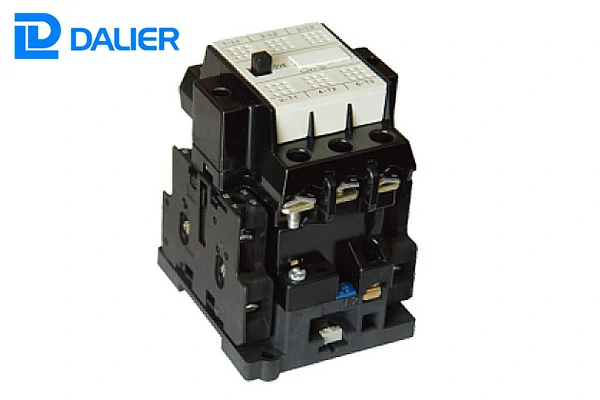
You're designing a control system for a factory conveyor belt, a food processing machine, or a small-scale manufacturing line. The motor needs to start, stop, and reverse—frequently, reliably, and from a distance. An AC contactor is the component that makes this possible: an electromagnetic switch that uses a low-voltage control signal to open and close a high-power motor circuit. The CJX1 series is built for exactly these applications, covering current ratings from 9A to 400A and designed for AC 50/60Hz systems. This guide covers what an AC contactor does, how it's constructed, the key specifications to look for, and how to select the right one for your motor control application.
From 9A to 400A – A Single Contactor Family That Covers a Broad Range of Applications
The CJX1 series offers a wide range of current ratings—from 9A to 400A—making it suitable for applications from small food-slicing machines to large manufacturing conveyors. This broad range means you can standardize on a single product family across different equipment sizes, reducing inventory complexity and simplifying maintenance.
9A to 32A – Small-Scale Manufacturing and Food Processing
For smaller motors—food-slicing machines, packaging equipment, and light conveyors—the lower end of the CJX1 range provides reliable switching without oversizing. These contactors are installed directly in the motor circuits, ensuring stable operation during the slicing process and maintaining food quality.
32A to 400A – Conveyors, Compressors, and Heavy Machinery
For larger industrial loads—factory conveyor belts, compressors, and heavy manufacturing machinery—the higher current ratings provide the capacity needed for reliable motor starting and stopping. The CJX1 series handles the high inrush currents typical of motor starting without contact welding or premature failure.
Remote Switching and Frequent Motor Control – Two Functions That Define the AC Contactor
The CJX1 series is designed for two primary functions: making and breaking electric circuits at a distance and frequent starting, stopping, and reversing control of AC motors. These functions make AC contactors indispensable in industrial automation.
Remote Control Capability
The contactor allows a low-voltage control circuit—from a PLC, a push button, or a sensor—to switch a high-power motor circuit safely. This eliminates the need for operators to manually switch high-voltage circuits, reducing the risk of personal injury and enabling automated operation.
Frequent Starting and Stopping
Unlike manual switches that wear out with repeated operation, contactors are designed for frequent switching. The CJX1 series handles thousands of operations without degradation, making it suitable for applications where motors start and stop multiple times per hour.
Double-Break Contacts and Arc Suppression – The Engineering That Keeps Contacts Reliable
The CJX1 series features a double-break direct-acting contact structure with enclosed conductive parts for safety. This design provides reliable arc suppression, ensuring long contact life and consistent performance.
Double-Break Contact Design
Double-break contacts open the circuit in two places simultaneously, which reduces arcing and extends contact life. This design is particularly important in AC circuits where arcing can be severe due to the lack of a zero-crossing point in DC-like conditions.
Enclosed Conductive Parts
The enclosed conductive parts provide additional safety, protecting operators from accidental contact with live components. This design also protects the contacts from dust and contaminants, extending service life in industrial environments.
Voltage, Current, and Frequency – The Three Numbers That Define Performance
The CJX1 series is rated for rated insulation voltage up to 690-1000V and rated operational voltage up to 380V under the utilization category AC-3, at 50/60Hz.
Rated Insulation Voltage – 690-1000V
The insulation voltage rating determines the maximum voltage the contactor can withstand without insulation breakdown. The 690-1000V range covers most industrial applications, from standard 380V systems to higher-voltage installations.
Rated Operational Voltage – Up to 380V in AC-3
The AC-3 utilization category is specifically for starting and stopping squirrel-cage motors—the most common industrial motor type. The contactor must handle six times the rated current during starting and interrupt the full motor current during stopping.
Frequency – 50/60Hz Compatibility
The CJX1 series is suitable for both 50Hz and 60Hz systems, making it compatible with electrical standards in most countries.
IEC, VDE, and GB – Standards That Guarantee Safety and Interoperability
The CJX1 series complies with IEC947, VDE0660, and GB14048 standards. These certifications provide assurance of quality, safety, and interoperability with other components.
IEC947 – International Standard
IEC947 is the international standard for low-voltage switchgear and controlgear. Compliance ensures the contactor meets global safety and performance requirements.
VDE0660 – German Standard
VDE0660 is the German standard for low-voltage switching devices. Compliance provides additional assurance of quality and reliability.
GB14048 – Chinese Standard
GB14048 is the Chinese national standard for low-voltage switchgear. Compliance ensures the contactor meets local regulatory requirements for the Chinese market.
Key Specifications at a Glance
| Specification | CJX1 Series Value | Why It Matters |
|---|---|---|
| Rated insulation voltage | 690-1000V | Maximum safe operating voltage |
| Rated operational current | 9A-400A | Load switching capacity |
| Rated operational voltage | Up to 380V (AC-3) | Motor starting and stopping capacity |
| Frequency | 50/60Hz | System compatibility |
| Contact structure | Double-break direct-acting | Reliable arc suppression |
| Safety features | Enclosed conductive parts | Operator protection |
| Standards | IEC947, VDE0660, GB14048 | Quality and safety certification |
| Applications | Motor control, remote switching | Industrial automation |
What Engineers Want to Know Before Specifying an AC Contactor
What current rating do I need for my motor?
The contactor's rated operational current must match or exceed the motor's full-load current. For motor starting applications (AC-3), the contactor must handle up to six times the rated current during start-up. The CJX1 series covers 9A to 400A, so select the rating that matches your motor size.
What is the difference between AC-3 and AC-1 duty?
AC-3 is for starting and stopping squirrel-cage motors—the contactor must handle high inrush currents. AC-1 is for resistive loads like heaters. The CJX1 series is rated for AC-3 duty, making it suitable for motor control applications.
Can the contactor handle frequent starting and stopping?
Yes. The CJX1 series is specifically designed for frequent starting, stopping, and reversing of AC motors. The double-break contact design and arc suppression ensure reliable operation even with thousands of switching cycles.
What standards does the CJX1 series comply with?
The CJX1 series complies with IEC947, VDE0660, and GB14048 standards. This ensures the contactor meets international safety and performance requirements.
Let's Match an AC Contactor to Your Motor Control Requirements
Selecting an AC contactor comes down to three factors: current rating (match your motor load), voltage rating (match your system), and application (match your switching frequency). Contact Dalier for a customized quote → —their team can help you select the right CJX1 series contactor for your specific motor control application.
Dalier is a manufacturer of electrical control components with over 15 years of experience in the industry. The CJX1-32 AC Contactors are part of the CJX1(3TB) series, which covers current ratings from 9A to 400A and is designed for AC 50/60Hz systems with rated insulation voltage up to 690-1000V. The series features double-break direct-acting contact construction, enclosed conductive parts for safety, and compliance with IEC947, VDE0660, and GB14048 standards. Applications include factory conveyor belts, food processing machinery, small-scale manufacturing equipment, and other industrial motor control applications. Dalier provides comprehensive technical support, samples, and after-sales service. Connect with Dalier to discuss your current rating requirements, voltage specifications, and application conditions.