English
 中文
 Русский язык
 Français
 Español


Can a Starter Start a Motor with One Button?
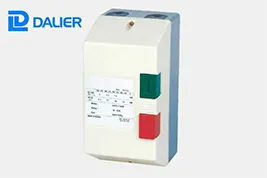
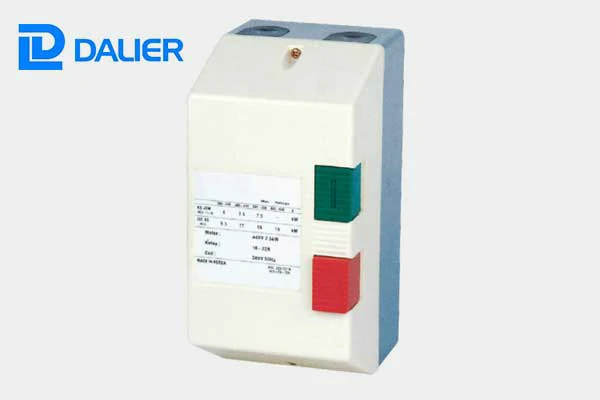
Yes—a Starter in the magnetic configuration uses a button to energize a contactor coil, and the resulting electromagnetic pull closes the main contacts that feed the motor. The DRW(GMW) series from Dalier operates on this principle: a start button energizes the coil, the armature pulls in, the contacts close, and an auxiliary contact latches the circuit so the button can be released. This article explains how the latching and stop sequence works, what the thermal relay contributes to motor protection, and what to verify when you're selecting a magnetic starter for a pump, fan, or small machine.
What Happens Inside a Magnetic Starter When You Press Start?
Coil Energization and Contact Closure
The starter contains an AC contactor and a thermal relay inside a steel enclosure. When the start button is pressed, the contactor coil receives voltage. The coil creates a magnetic field, the armature is pulled toward the core, and the main contacts close. That closure connects the motor to the supply.
The auxiliary contact—wired in parallel with the start button—closes at the same time. When the operator releases the button, the auxiliary contact holds the coil energized. That self-latching action is what makes a momentary button press sufficient to keep the motor running.
Stop Button and Coil De-energization
Pressing the stop button opens the coil circuit. The magnetic field collapses, a spring returns the armature, and the main contacts open. The auxiliary contact opens with them, so the latch is broken and the motor stays off until the start button is pressed again.
The DRW(GMW) series is built for AC 50Hz or 60Hz circuits up to 550V, and it's used for far-distance making and breaking as well as frequency starting and controlling of motors. The button can be mounted remotely from the starter enclosure, which is why the latching function matters: the operator doesn't have to hold the button while the motor runs.
How Does the Thermal Relay Protect the Motor?
Overload Sensing and Trip Contact
The thermal relay sits in the motor circuit and monitors the current. If the current exceeds the relay's setting for a sustained period, a bimetal element inside the relay bends and trips a normally closed contact. That contact is wired in series with the coil circuit, so when it opens, the coil loses power and the starter drops out.
The relay's trip setting has to match the motor's full-load current. If the setting is too high, the motor can overheat before the relay trips. If it's too low, the starter trips on normal starting current. The DRW(GMW) series pairs the contactor with a thermal relay sized to the motor's power rating.
Undervoltage and Loss-of-Supply Behavior
The contactor coil is also a voltage monitor. If the supply voltage drops below the coil's holding threshold, the magnetic force can't keep the armature pulled in, and the starter drops out. That behavior protects the motor from running at reduced voltage, which can cause overheating and winding damage. When the supply returns, the motor doesn't restart on its own—the operator has to press the start button again.
| Model | Rated Power (kW) at 380–440V, AC-2 | Rated Power (kW) at 200–220V, AC-2 | Typical Motor Size |
|---|---|---|---|
| DRW-9(B) | 4 | 2.5 | Small pumps, fans |
| DRW-18(B) | 7.5 | 4.5 | Medium fans, conveyors |
| DRW-32(B) | 15 | 7.5 | Larger pumps, compressors |
| DRW-50(B) | 22 | 15 | Industrial machinery |
| DRW-86(B) | 45 | 25 | Heavy-duty motor loads |
What Voltage and Power Ratings Define the DRW(GMW) Series?
The DRW(GMW) series covers motor ratings from 0.4kW to 45kW depending on the voltage and the utilization category. At 380–440V under AC-2 duty, the range runs from 4kW on the DRW-9(B) up to 45kW on the DRW-86(B). At 200–220V, the same models cover 2.5kW to 25kW.
The starter is rated for AC 50Hz or 60Hz and voltages up to 550V. That voltage range covers the low-voltage motor circuits used in pumps, fans, conveyors, and small machine tools. The small volume, light weight, and low power consumption of the design suit panel builders who need to fit multiple starters into a control cabinet.
Where Does a Magnetic Starter Fit in Motor Control?
A Starter in this configuration is used where a motor needs remote start-stop control and overload protection without a variable-speed drive. That covers water pumps, ventilation fans, conveyors, small compressors, and machine tools that run at a fixed speed.
The DRW(GMW) series is specified for AC 50Hz or 60Hz circuits up to 550V and for far-distance making and breaking of motor circuits. In a pump station, the starter sits in a control panel and the start-stop buttons are mounted at the operator's station. In a conveyor line, the starter provides the local control point and the thermal protection for the drive motor.
What Should You Check Before Selecting a Magnetic Starter?
How do I match the starter to my motor's full-load current?
The starter's rated power at your system voltage is the starting point, but the thermal relay setting has to match the motor's full-load current (FLC). Check the motor nameplate for the FLC at the actual supply voltage, then set the relay to that value. The starter's contactor must also be rated for the motor's starting current, which is typically 6 to 8 times the FLC for a direct-on-line start.
What utilization category applies to my load?
The DRW(GMW) parameter table lists AC-2 and AC-3 ratings. AC-3 is the standard category for squirrel-cage motors that start and stop while running. AC-2 covers a heavier duty cycle with more frequent starting. Match the selected category to the actual motor duty. A conveyor that starts and stops frequently under load needs a starter rated for that cycle.
Is a separate fuse or breaker required?
A magnetic starter does not provide short-circuit protection. The upstream circuit needs a fuse or a circuit breaker sized for the motor branch circuit. The starter's thermal relay handles overloads, but the short-circuit protection has to come from the branch protection device. Confirm the coordination between the fuse or breaker and the starter's withstand rating before installation.
Straight Answers on Magnetic Starters
What's the difference between a magnetic starter and a manual starter?
A manual starter uses a hand-operated switch to close the motor circuit. A magnetic starter uses an electromagnetic contactor, so the motor can be controlled from a remote pushbutton station. The magnetic starter also includes a thermal relay for overload protection, which a basic manual switch may lack.
Why does the motor not restart after a power failure?
The contactor coil loses its holding voltage when the supply fails, and the armature drops out. When the supply returns, the coil is not energized because the start button hasn't been pressed again. That behavior is intentional—it prevents a motor from restarting unexpectedly after a power interruption.
Can the starter be used for a reversing motor?
The standard DRW(GMW) starter is a single-direction starter. For reversing duty, two starters are used in a reversing configuration, with an interlock that prevents both contactors from closing at the same time. The reversing wiring is separate from the single-direction starter circuit.
What maintenance does a magnetic starter need?
Inspect the contactor contacts for pitting or wear during periodic maintenance. Check the thermal relay's trip setting against the motor's FLC. Verify that the coil terminals and the control wiring are tight. Clean the enclosure interior to prevent dust buildup that could affect the contactor's movement. The DRW(GMW) steel enclosure protects the internal components, but the button wiring and the relay setting should still be checked on a scheduled basis.
Let's Match a Magnetic Starter to Your Motor Circuit
Share Your Voltage, Motor Power, and Duty Cycle
A Starter in the DRW(GMW) series should match your supply voltage, motor full-load current, and starting duty—not the other way around. The series covers AC 50Hz or 60Hz up to 550V, with motor ratings from 4kW to 45kW at 380–440V and from 2.5kW to 25kW at 200–220V, using an electromagnetic contactor and a thermal relay in a steel enclosure. If you're specifying a starter for a pump, fan, conveyor, or small machine tool, send us your voltage, motor power, and duty cycle — we'll help you confirm the right model and relay setting before you order.