English
 中文
中文 Русский язык
 Français
 Español

Thermal relay working principle
In modern electrical control systems, protecting motors and equipment from overload damage is critical for ensuring safety, efficiency, and long service life. A thermal relay is one of the most widely used protection devices in motor control circuits. Understanding the thermal relay working principle helps engineers, technicians, and system designers select the right protection solution and improve overall system reliability.
What Is a Thermal Relay?
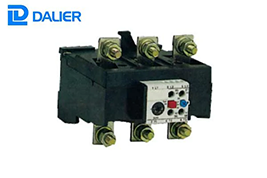
A thermal relay, also known as a thermal overload relay, is an electrical protection device designed to safeguard motors and electrical equipment from overheating caused by overload currents. It detects abnormal current levels by sensing heat generated within the relay and disconnects the circuit when unsafe conditions occur. Thermal relays are commonly used together with contactors in motor starter systems.
Working Principle of a Thermal Relay
The thermal relay working principle is based on the relationship between electric current and heat. Its operation can be explained step by step:
Current Flow Detection: When the motor operates, current flows through the thermal relay’s heating element.
Heat Generation: The heating element produces heat proportional to the magnitude of the current. Normal current generates normal heat.
Temperature Rise Under Overload: During overload conditions, excessive current causes abnormal heat buildup inside the relay.
Bimetal Strip Deformation: The increased heat causes the bimetal strip to bend or deform due to different expansion rates of the bonded metals.
Trip Mechanism Activation: Once the deformation reaches a preset limit, the trip mechanism is triggered.
Circuit Disconnection: The relay opens its auxiliary contact, cutting off the control circuit and stopping the motor.
Reset After Cooling: After the relay cools down, it can be reset manually or automatically, depending on the relay type.
Key Components & Types of Thermal Relays
Key Components
Bimetal Strip: Senses temperature changes caused by overload current
Heating Element: Converts electrical current into heat
Trip Mechanism: Initiates contact switching during overload
Auxiliary Contacts: Control the contactor or alarm circuit
Reset Mechanism: Enables manual or automatic recovery after tripping
Types of Thermal Relays
Bimetallic Thermal Relays: Most commonly used, reliable and cost-effective
Eutectic Alloy Thermal Relays: Use low-melting-point alloy for precise tripping
Manual Reset Thermal Relays: Require operator intervention after tripping
Automatic Reset Thermal Relays: Automatically reset once temperature normalizes
Application Scenarios of Thermal Relays
Thermal relays are widely applied in motor-driven systems across various industries, including:
-
Electric motors for pumps, fans, compressors, and conveyors
-
Industrial machinery such as packaging, printing, and processing equipment
-
HVAC systems to protect fan and blower motors
-
Control panels and distribution boards
-
Factory automation systems requiring stable motor protection
Their time-delay characteristics make thermal relays ideal for handling temporary current surges during motor startup.
Summary
A thermal relay is a vital component for overload protection in electrical systems. By utilizing heat generated from excessive current, it provides reliable and delayed protection against motor overheating. With simple structure, multiple types, and wide application scenarios, thermal relays remain an essential solution in modern motor control and automation systems.
FAQ
Q1: What is the purpose of a thermal relay?
A: It protects motors and electrical equipment from overload and overheating.
Q2: Does a thermal relay protect against short circuits?
A: No. Short-circuit protection requires fuses or circuit breakers.
Q3: What causes a thermal relay to trip?
A: Prolonged overcurrent leading to excessive heat inside the relay.
Q4: Can a thermal relay be reused after tripping?
A: Yes. Most thermal relays can be reset manually or automatically after cooling.
Q5: Why are thermal relays commonly used with contactors?
A: They control the contactor coil to disconnect power when overload occurs.