English
 中文
中文 Русский язык
 Français
 Español

What are the different types of electrical cable lugs?
Electrical cable lugs play a critical role in creating safe, reliable, and efficient electrical connections. Understanding their types, materials, and applications helps ensure proper performance across various electrical systems.
What Are Electrical Cable Lugs and Why Are They Important?
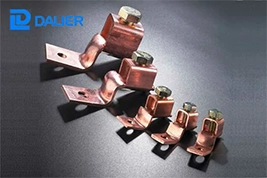
Electrical cable lugs, also known as cable terminals or connectors, are devices used to securely and reliably terminate cables or wires to electrical equipment, busbars, or other conductors. Typically made of metal, they are attached to the end of a cable and facilitate connections via screws, welding, or crimping.
The critical importance of cable lugs lies in their ability to ensure:
-
Safety and Reliability: They provide low-resistance, high-strength connections, preventing overheating, sparking, or disconnection failures.
-
Operational Convenience: They simplify installation and maintenance, allowing for easier repeated connections and disconnections.
-
Efficient Current Transfer: They enable efficient power transmission with minimal energy loss.
-
Equipment Protection: They prevent cable strands from fraying and avoid short circuits or damage to connected equipment.
-
System Standardization: They allow for compatible connections between cables and equipment of varying specifications.
Understanding Cable Lug Types and Materials
Classification by Connection Method
Crimp-Type Lugs
-
Permanently attached using a specialized crimping tool that deforms the lug around the cable.
-
Suitable for various wire gauges, providing uniform contact pressure.
-
Require correctly matched crimping dies and tools.
Bolted (or Screw-Type) Lugs
-
Secured using a bolt and nut assembly.
-
Allow for repeated disassembly, making maintenance easier.
-
Require periodic checks to ensure tightness and prevent loosening.
Soldered/Welded Lugs
-
Attached using a metallurgical bond via soldering (tin, silver) or welding.
-
Offer very low connection resistance, ideal for high-current applications.
-
Require higher installation skill.
Insulation-Piercing Lugs
-
Connect cables without the need to strip insulation.
-
Enable quick installation, suitable for field work.
-
Generally have a smaller contact area.
Classification by Shape/Design
Ring Lugs
-
Feature a circular end with a hole for a bolt.
-
Prevent rotation, offering the most secure mechanical connection.
-
The most common type, ideal for most fixed connections.
Fork (Spade) Lugs
-
Feature a U-shaped fork that can be installed without fully removing the nut.
-
Facilitate installation and maintenance in crowded terminal blocks.
-
Slightly less resistant to rotation than ring lugs.
Pin (or Tab) Lugs
-
Feature a flat, male pin that inserts into a corresponding female receptacle.
-
Commonly used in electronics, automotive systems, and appliances.
-
Come in standardized sizes (e.g., standard, miniature).
Spade Lugs (Wide Fork)
-
Similar to fork lugs but with a wider opening for easier alignment.
-
Often perform better in high-vibration environments.
Butt Connectors (Splice Lugs)
-
Used to join two cable ends together in a straight line.
-
Often come with an insulating sleeve.
Other Specialized Types
-
Angled Lugs: 90-degree or 45-degree designs for space-constrained installations.
-
Twin-Bore Lugs: Have two bolt holes for enhanced mechanical stability.
-
Battery Lugs: Specifically designed for battery terminal connections.
-
Waterproof Lugs: Incorporate sealing features for wet or outdoor environments.
Material Selection
Copper Lugs
-
High conductivity (pure copper ~100% IACS).
-
Excellent ductility and good corrosion resistance.
-
Often tin-plated or silver-plated to prevent oxidation.
-
Higher cost but superior performance.
Aluminum Lugs
-
Lightweight and lower cost.
-
Conductivity is approximately 61% that of copper.
-
Prone to oxidation; require special compounds or treatments.
-
Typically used with aluminum cables.
Bimetal (Copper-Aluminum) Lugs
-
One end is copper, the other is aluminum.
-
Specifically designed to prevent galvanic corrosion from direct copper-aluminum contact.
-
Joined using friction welding or explosion welding.
Brass Lugs
-
High mechanical strength and wear resistance.
-
Lower conductivity than pure copper.
-
Often used for low-current applications or where mechanical strength is critical.
Plating Options
-
Tin Plating: Most common; prevents oxidation, improves compatibility.
-
Silver Plating: Highest conductivity, excellent for high temperatures, higher cost.
-
Nickel Plating: Excellent corrosion resistance, good appearance.
-
Gold Plating: Superior corrosion resistance, used in high-reliability applications.
Electrical Cable Lug Applications
Cable lugs are ubiquitous across industries due to their versatility. Key sectors include:
- Industrial: Power distribution panels, motors, transformers, and heavy machinery. (Crimp/ring lugs, copper materials.)
- Residential/Commercial: Wiring for outlets, switches, circuit breakers, and HVAC systems. (Insulated fork/ring lugs, copper or aluminum.)
- Automotive: Battery connections, alternators, and wiring harnesses. (Crimp/fork lugs, tinned copper for corrosion resistance.)
- Renewable Energy: Solar panels, wind turbines, and battery storage systems. (Insulated, weather-resistant lugs; copper for high efficiency.)
- Marine/Aerospace: Saltwater-resistant (tinned copper) or lightweight (aluminum) lugs for ships, planes, or satellites.
- Utility Grids: High-voltage transmission lines and substations. (Compression lugs, copper-aluminum transition.)
Selecting the Right Electrical Cable Lug: Key Considerations
When choosing an electrical cable lug, key factors include conductor material and size, current rating, operating voltage, environmental conditions, and installation method (crimping, bolting, or soldering). Proper compatibility between the lug, cable, and terminal ensures long-term reliability and compliance with safety standards.
Conclusion
Though small in size, cable lugs are indispensable components in any electrical system. Their correct selection and application directly impact the safety, reliability, and efficiency of the entire installation. The selection process requires a holistic consideration of electrical parameters, mechanical compatibility, environmental conditions, installation methods, and cost-effectiveness. While new designs and technologies continue to emerge, the fundamental principle remains unchanged: ensuring a safe, reliable, and efficient electrical connection.
FAQ
Q1: What is the difference between copper and aluminum cable lugs?
Copper lugs offer higher conductivity and corrosion resistance, while aluminum lugs are lighter and more economical for large conductors.
Q2: When should bi-metal cable lugs be used?
Bi-metal lugs are used when connecting copper cables to aluminum terminals to prevent galvanic corrosion.
Q3: How do I choose the correct cable lug size?
The lug size should match the cable cross-section and terminal stud size to ensure a secure and low-resistance connection.
Q4: Are cable lugs suitable for outdoor applications?
Yes, when made from corrosion-resistant materials and properly insulated or sealed, cable lugs can be used outdoors.