English
 中文
 Русский язык
 Français
 Español


Why Use a Compact AC Contactor in a Panel?
An AC Contactor sits between the control signal and the motor, closing and opening the circuit every time the process calls for a start or stop. You'll see how a compact model handles that duty, what accessories extend its function, and where it fits on a panel.
What Questions Come Up Before Wiring One In?
Can a small contactor survive repeated start-stop cycles?
The CJX2-K06 is explicitly rated for controlling AC motors in circuits with frequent start-stop operations, according to the product page. That rating is the core distinction: a general-purpose switch isn't built for the inrush and arc interruption that come with motor starting, while this model is positioned for exactly that pattern.
How does it protect the circuit beyond switching?
On its own, a contactor only switches. The protective layer comes from pairing it with a thermal relay. The page notes that adding an auxiliary contact group and combining it with a thermal relay can protect the circuit from overload, so the contactor becomes part of a broader motor-protection scheme rather than a standalone component.
The Role It Plays in a Motor Circuit
A contactor's job is straightforward on paper: close the circuit when the coil is energized, open it when the coil drops out. In practice, the repeated making and breaking of a motor circuit puts the contacts under arc stress every cycle. That's why the frequent start-stop rating matters—it signals the contact assembly and mechanism are built to endure that pattern rather than treat it as an occasional event.
The CJX2-K06 also supports long-distance circuit connection, per the page. In a panel or a remote control cabinet, that means the operator interface doesn't have to sit next to the motor. A pushbutton or control relay can send the signal from a safe or convenient location, and the contactor does the switching at the load.
Why "frequent start-stop" is a different duty class
A contactor that switches a motor a few times a day and one that switches it dozens of times per shift face different electrical and mechanical demands. The page positions the CJX2-K06 for the latter. That's the practical reason to match the contactor's stated duty to the actual process rhythm, rather than treating all switching devices as interchangeable.
Compact Housing Without Cutting Corners
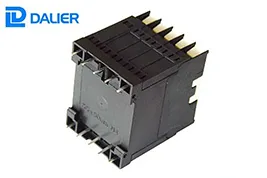
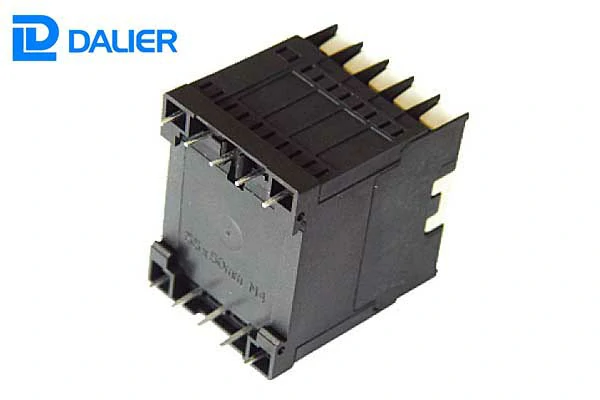
Panel space is rarely free. The CJX2-K06 is described as compact, with a flame-retardant housing and high-conductivity contacts for stable connections. Those three attributes address the constraints installers actually face: the device has to fit a DIN rail or mounting plate without crowding adjacent components, the housing has to resist ignition risk in an enclosure, and the contacts have to maintain a low-resistance path across thousands of operations.
The compact form factor doesn't mean the internal parts are downsized beyond function. High-conductivity contacts are the point where the electrical work happens, and the page treats them as a deliberate design choice rather than a commodity detail. For a control panel builder, that translates into a component that can be specified on the strength of its contact material and housing, not just its footprint.
What compactness buys at the panel level
A smaller contactor leaves room for wiring gutters, terminal blocks, and the thermal relay that often sits right beside it. When the contactor and its accessories share a tight footprint, the panel layout stays serviceable—technicians can reach terminals and trace circuits without dismantling adjacent rows.
Accessories That Expand the Function
A contactor alone switches the main circuit. The page notes that an auxiliary contact group can be added, and that combination with a thermal relay extends protection to overload conditions. The auxiliary group is what lets the contactor report its state to a PLC, an indicator lamp, or an interlock circuit. Without it, the control system has no confirmation that the main contacts actually closed.
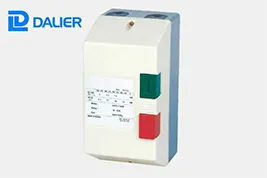
The thermal relay, paired with the contactor, adds the overload layer. When current exceeds a set threshold for too long, the relay trips and the contactor opens. The page frames this as a combined protective arrangement, which is how motor control circuits are typically built: the contactor handles switching, the relay handles sustained overcurrent, and the auxiliary contacts carry the status signal.
Mounting and wiring at a glance
-
Confirm the coil voltage matches the control circuit before wiring.
-
Leave space for the auxiliary contact group if the control scheme needs status feedback.
-
Mount the thermal relay on the load side and set it to the motor's rated current.
-
Verify the contactor's frequent start-stop rating against the actual process cycle.
-
Check that the flame-retardant housing and terminal clearance suit the enclosure rating.
Where the CJX2-K06 Fits the Panel
The CJX2-K06 AC contactor from CNDALIER is built for the role the page describes: controlling AC motors in circuits with frequent start-stop operations, supporting long-distance circuit connection, and pairing with an auxiliary contact group and thermal relay for overload protection. Its compact, flame-retardant housing and high-conductivity contacts make it a fit for panel builders who need a switching device that doesn't demand extra real estate. The ISO 9001 and CE compliance listed on the page gives specifiers a baseline for quality management and market access, while the product's positioning as a motor-control component keeps the application scope clear. For a control cabinet serving a process with repeat starts, this contactor is designed to sit in that circuit and do the switching without turning every cycle into a wear event.
What to confirm before specifying
A contactor's datasheet matters, but the application details decide whether it's the right fit. Confirm the process cycle against the frequent start-stop rating, check whether auxiliary contacts are needed for status feedback, and plan the thermal relay setting before the panel goes into service. Those three checks turn the contactor from a catalog line into a working part of the motor-control circuit.
Let's Talk Through Your Motor Control Circuit
Send over your motor rating, start-stop rhythm, and panel layout—we'll help you confirm whether the CJX2-K06 fits the duty or whether a different configuration serves the circuit better. Talk to CNDALIER about your AC Contactor requirements and get a product-level answer before you lock the BOM.