English
 中文
 Русский язык
 Français
 Español


What Kind of Load Does a CJX2-N40 AC Contactor Switch Most Often in the Panel?
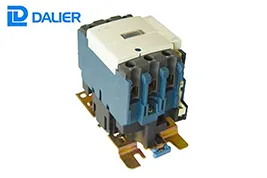
A three-pole switching device whose coil pulls in the main contacts to send power to a load, then drops out to break the circuit. AC Contactor operation here is built around repeated start and stop cycles rather than a single on-off switch, and the CJX2-N40 sits in the middle of a series that covers small machines up to heavier motor feeds. Here's what it switches, how its ratings read, and how it fits a panel.
What the Contactor Switches
Which Loads Does It Run Most Often?
The two listed uses are machinery motors in medium-sized manufacturing facilities and fans in large ventilation systems for commercial buildings. In a plant line, it starts and stops the drive motor on a machine tool or conveyor; in a building system, it regulates the power supply to ventilation fans. The contactor handles making and breaking the circuit and frequent starting, which is the duty that sets its contact rating.
What Ratings Sit Behind the 40 in the Model?
The 40 marks the rated operational current at 380V under AC3 duty: 40A. The same unit carries a 60A conventional thermal current and a rated insulation voltage of 660V, suitable for circuits up to 660VAC at 50Hz or 60Hz. The controlled power shifts with line voltage — 11kW at 220V, 18.5kW at 380V, 15kW at 415V and 440V, and 18.5kW at 660V — so the load should be matched to the actual supply rather than the 40A figure alone.
How Are the Main and Aux Contacts Arranged?
The contactor is 3P, with three normally open main contacts carrying the motor current. Alongside them sit one NO auxiliary contact and one NC auxiliary contact, used for control-circuit signals such as run indication, interlocking, or a holding circuit. The main poles and the aux poles do different jobs: the main poles break load current, the aux poles carry only control current.
How the Model Code Reads
Reading the Digits After CJX2-
The type designation breaks into four positions. From left to right they record the rated operating current in amps, the number of NO auxiliary contacts, the number of NC auxiliary contacts, and the coil voltage code. That code ties to a voltage table spanning 24V, 36V, 48V, 110V, 127V, 220V, 230V, 240V, 380V, 415V, 440V, 480V, 600V, and 660V, with separate letter sets for 50Hz, 60Hz, and 50/60Hz coils. When you order, the coil voltage code is what keeps the coil matched to the control supply in the panel.
What the Coil Asks For
Closing and Releasing Voltage
The coil closes between (0.85-1.1)Us and releases between (0.2-0.75)Us, where Us is the rated coil supply voltage. That window means the contactor will pull in within the normal supply tolerance and drop out before the voltage collapses completely, which keeps the control circuit predictable in systems with voltage dips at motor start.
Coil Power at 50Hz and 60Hz
For the N40 size, the closing draw is 200VA and the holding draw after pull-in is 20VA, at both 50Hz and 60Hz, with coil consumption rated 6-10W. The high closing VA is a short pull-in moment; the closed-state VA is what the control supply has to keep up with once the armature is seated.
How It Mounts in the Panel
Rail or Screw Installation
The contactor mounts on a 35mm standard installation rail with a snap gauge, or by screws through the mounting holes. The 40/50/63 frame size uses three screw positions, with mounting holes listed as 2-φ4.5 and 2-4.5×9.5 on the outline drawing. Choosing rail or screws usually comes down to whether the panel is built for modular DIN mounting or a fixed drilled enclosure.
The N40 Specification at a Glance
What the Product Page Lists Up Front
The table collects the N40 ratings, contacts, coil data, and mounting exactly as listed, so a panel designer can match the contactor to the motor and control supply before an order is placed.
| Item | Detail |
|---|---|
| Model | CJX2-N40 (CJX2-N(LC1) series) |
| Rated insulation voltage | 660V |
| Supply frequency | 50Hz / 60Hz |
| Conventional thermal current | 60A |
| Rated operational current (380V, AC3) | 40A |
| Controlled power | 220V 11kW; 380V 18.5kW; 415V 15kW; 440V 15kW; 660V 18.5kW |
| Contacts | 3P NO main; 1 NO + 1 NC auxiliary |
| Coil consumption | 6-10W; closing 200VA, closed 20VA (50/60Hz) |
| Mounting | 35mm rail snap gauge or screw mounting |
| Coil voltage range | 24V to 660V, code-selected |
What It Can Combine Into
The base contactor grows into other control devices when paired with accessories. With an auxiliary contact group, an air delayer, or a machine interlocking device it becomes a delay contactor, a mechanical interlocking contactor, or a star-delta starter; paired with a thermal relay it forms an electromagnetic starter that adds overload protection to the switching function.
Where the Series Sits in the Range
From the Small N09 to the 115A Frame
The CJX2-N(LC1) series runs from the small CJX2-N09 frame up to the 95A CJX2-80, with the N40 occupying the middle motor-control band. The range also extends to the CJX2-F115, rated 660VAC at 50/60Hz and 115A, for heavier feeds that outgrow the N series frames. Picking the frame means matching the motor's AC3 current and controlled power to the right row of the specification table, then selecting the coil voltage code for the control supply.
Dalier, the Contactor, and the Enquiry
What the Manufacturer Supplies
DALIER (China Dalier Electrical) supplies the CJX2-N40 AC Contactor as part of the CJX2-N(LC1) series, with stable contact performance and a corrosion-resistant construction for demanding plant and ventilation environments. The series covers accessory combinations for delay, interlock, star-delta, and starter assemblies, and the related range spans the N09, 80, and F115 frames for different load sizes.
What to Send With the Enquiry
Send these so the right frame and coil can be selected on the first pass:
- The load: motor type, rated kW, and the supply line voltage and frequency.
- The coil supply voltage and whether the control is 50Hz, 60Hz, or 50/60Hz.
- Auxiliary contact needs: how many NO and NC signals the control circuit requires.
- Mounting preference: 35mm rail or screw mounting, and panel space available.
- Any accessory combination: delay, mechanical interlock, star-delta, or thermal relay starter.
An AC Contactor selection is settled by the motor current and the coil voltage first, so those two details narrow the frame before accessories are added.
Send the Motor Load and the Coil Voltage
What to Put in the Message
Put the motor kW, the line voltage, and the coil voltage in the first note. Those three decide the frame size and coil code; aux contacts and accessories follow after.
Send them through our request a quotation form and we'll come back with an AC Contactor matched to your motor duty, coil supply, and panel mounting.